Hostinger Hosting Review: Pros, Cons, Pricing & Performance
Hostinger Hosting Review: Discover real pricing, honest pros and cons, speed tests, and whether this budget host is worth your money this year.
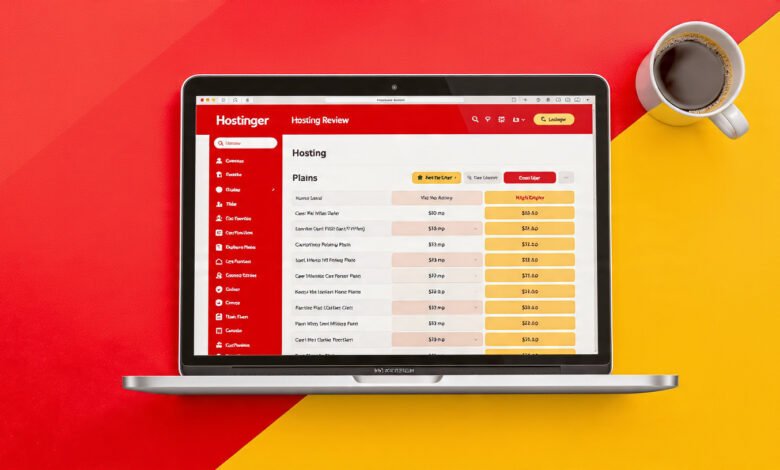
Hostinger hosting review — three words that pull in thousands of searches every month, and for good reason. If you’ve been shopping around for web hosting, you’ve almost certainly landed on Hostinger’s pricing page and stared at those eye-catching discounts, wondering: Is this too good to be true?
Founded in Lithuania in 2004, Hostinger has grown from a tiny free hosting service into one of the largest web hosting providers on the planet, now serving over 29 million customers in more than 150 countries. That kind of scale doesn’t happen by accident. But scale alone doesn’t mean a hosting company is the right fit for you.
This article breaks down everything you need to know before you sign up — actual server performance data, a clear look at the pricing structure (including those sneaky renewal rates), an honest assessment of the pros and cons, and a plain-English explanation of who Hostinger actually works best for.
We’ve pulled from multiple independent tests, real user data, and hands-on experience to give you a complete picture. Whether you’re launching your first blog, migrating a business website, or scaling up to a VPS hosting plan, this review covers all of it. By the end, you’ll know exactly whether Hostinger deserves your money in 2026 — or whether you should keep looking.
What Is Hostinger? A Quick Background
Hostinger started life as “Hosting Media” back in 2004 in Kaunas, Lithuania. The company launched a free hosting service called 000webhost in 2007, expanded into the US market under the name Hosting24 in 2008, and eventually rebranded to the Hostinger name in 2011 under CEO Arnas Stuopelis.
Today, Hostinger is one of the most recognizable names in affordable web hosting. The company operates its own data centers across nine countries — the USA, UK, France, Netherlands, Indonesia, Lithuania, Singapore, India, and Brazil — and runs a custom control panel called hPanel instead of the industry-standard cPanel.
The main pitch is simple: premium-level performance at budget prices. Whether that holds up under scrutiny is exactly what this review is here to answer.
Hostinger Hosting Plans and Pricing in 2026
One of the first things that jumps out about Hostinger’s pricing is how aggressive the introductory rates are. Plans are structured around shared hosting, WordPress hosting, cloud hosting, and VPS hosting — and the price difference between a one-month plan and a 48-month plan is dramatic.
Shared Hosting Plans
Hostinger’s shared hosting tiers break down like this:


- Premium Shared Hosting — Starting around $2.99/month (annual plan), this is the most popular entry point. You get 100GB SSD storage, unlimited websites, unlimited email accounts, a free domain name on annual billing, free SSL certificate, and weekly backups. For most bloggers and small business owners, this plan hits the sweet spot.
- Business Shared Hosting — Steps up the resources considerably. You get NVMe storage (faster than standard SSD), daily backups instead of weekly, CDN integration, and more server resources. If you’re running a WooCommerce store or expecting steady traffic, the Business plan gives you the stability to handle it.
- Cloud Startup — Technically a cloud hosting entry point, this plan adds auto-scaling capabilities, a dedicated IP address, priority support, and up to 300 websites. Best suited for agencies or developers managing multiple client projects.
WordPress Hosting Plans
Hostinger offers managed WordPress hosting plans that are largely similar to shared hosting in structure but come pre-optimized for WordPress. These include one-click WordPress installation, the LiteSpeed Cache plugin already configured, and WordPress-specific performance tuning from the server level. Pricing follows the same structure as shared hosting.
VPS Hosting Plans
For those who need more control, Hostinger VPS hosting starts at approximately $8.99/month on a 24-month term. These are KVM-based virtual private servers with full root access, dedicated resources, and a choice of operating systems. Hostinger has added some genuinely useful VPS features recently, including one-click deployment of tools like Docker and self-hosted n8n workflow automation — an open-source alternative to Zapier.
A Word on Renewal Pricing
This is the part most review sites gloss over, so let’s be clear: Hostinger’s promotional rates apply only to your first billing cycle. After that, renewal prices are noticeably higher. For example, a plan that costs $2.99/month on a 12-month introductory deal may renew at around $7.99 to $11.99/month depending on the plan and auto-renew settings.
This is the single most common complaint in real user reviews of Hostinger. The solution is simple: commit to a longer plan upfront (24 or 48 months) if you’re serious about the platform, and always calculate the total cost of ownership before clicking buy — not just the introductory monthly rate.
Hostinger Performance: Speed and Uptime Test Results
Performance is where Hostinger hosting separates itself from most budget competitors. Here’s what independent testing actually shows.
Speed Test Results
TechRadar’s testing recorded a Largest Contentful Paint (LCP) of 0.607 seconds — the second-fastest result across 15 tests. That’s a genuinely strong number for a shared hosting plan. Under stress testing using k6 (20 virtual users hitting the server simultaneously), Hostinger maintained 15 requests per second throughout — acceptable for shared hosting and impressive compared to similarly priced competitors.
Using Dotcom Tools’ Website Speed Test across 16 locations in the US and Europe, Hostinger clocked in at 878ms average page load time, placing it in the top 25% of all tested providers.
WebsitePlanet’s test achieved a typical loading time of around 0.8 seconds with 100% uptime over a full month of monitoring.
The secret behind these speed numbers comes down to a few key technical choices:
- LiteSpeed web servers — Significantly faster than the Apache servers most cheap hosts still use. LiteSpeed handles traffic spikes more efficiently and uses server-side caching to reduce load times.
- NVMe SSD storage — Available on Business plans and above, NVMe storage offers faster read/write speeds than standard SSD.
- Global CDN — Higher-tier plans include CDN integration, which caches your site on servers closer to your visitors’ physical location.
- HTTP/2 and HTTP/3 support — Modern protocol support that improves connection speed, especially on mobile.
Uptime Test Results
Across multiple independent reviews, Hostinger’s uptime performance consistently beats its own 99.9% guarantee:
- One reviewer recorded 99.99% uptime over a six-month period, with only 10 minutes of total downtime
- TechRadar’s test site on the most basic shared plan maintained 100% uptime over 10 weeks
- Independent long-term tracking on US servers showed 99.99% uptime over a 12-month period
These numbers are genuinely good — especially on US-based servers. Indian and Southeast Asian server performance has been more mixed in some reviews, so if your target audience is in those regions, it’s worth factoring that into your plan choice.
If Hostinger does fail to meet its uptime guarantee, you’re entitled to a 5% credit on your monthly fee. That’s modest, but the practical reality is that you’re unlikely to need it based on current performance data.
hPanel: Hostinger’s Custom Control Panel
Instead of the industry-standard cPanel, Hostinger built its own control panel from scratch called hPanel. Whether that’s a plus or a minus depends on your background.
What hPanel Does Well
If you’ve used cPanel before, hPanel will feel cleaner and less cluttered. The layout is logical, the design is modern, and it hides most of the technical complexity behind a user-friendly interface without removing functionality. Key actions like installing WordPress, managing domains, setting up email accounts, and generating SSL certificates are all accessible within a few clicks.
Each website you host gets its own dedicated dashboard, which is a nicer way to manage multiple sites compared to cPanel’s single-view approach.
Kodee AI Assistant
In 2026, Hostinger’s hPanel includes an AI assistant called Kodee. Earlier versions were basic, but as of January 2026, Kodee can actually execute tasks — over 350 different actions including site migrations, health checks, and dashboard navigation. It’s available 24/7 and is significantly better than most hosting company chatbots at understanding real hosting questions.
hPanel vs cPanel
The trade-off is that hPanel is proprietary. If you’ve spent years learning cPanel’s layout and want to transfer that knowledge to a new host, you’ll have a learning curve. For anyone coming in fresh, though, hPanel is arguably easier to pick up than cPanel.
Hostinger’s Key Features Breakdown
Free SSL Certificate
Every Hostinger hosting plan includes a free SSL certificate through Let’s Encrypt. It auto-renews at no extra cost. HTTPS is standard across all plans, which matters both for security and for search engine rankings — Google treats SSL as a ranking signal.
Free Domain Name
Premium plans and above include a free domain name for the first year on annual or longer billing cycles. Popular domains like .com typically renew at around $13–14/year after the free period, which is standard market rate.
Website Builder
All plans include a drag-and-drop website builder plus access to an AI website builder. In testing, the AI builder generated a complete website layout in under 60 seconds, including relevant copy and a functional contact form. For a non-technical user who needs a basic site up quickly, this is a genuinely useful tool.
Security Features
Hostinger has moved security from an optional add-on to a standard inclusion. Current plans include:
- Unlimited free SSL certificates
- Malware scanning and automatic alerts
- DDoS protection
- Cloudflare CDN integration for additional security and speed
- Automatic backups (weekly on lower plans, daily on Business and above)
One-Click WordPress Installation
WordPress installation is a single click from hPanel. Hostinger also pre-optimizes new WordPress sites for speed and includes the LiteSpeed Cache plugin pre-configured, so you’re starting from a performance-tuned baseline rather than having to figure out caching yourself.
Global Data Centers
Hostinger operates data centers in nine countries: USA, UK, France, Netherlands, Lithuania, Indonesia, Singapore, India, and Brazil. You choose your server location when setting up a site. More data centers than most budget hosts, and the geographical spread means you can host closer to your actual target audience.
Hostinger Pros and Cons
Pros
- Unbeatable introductory pricing — Some of the lowest entry-level prices in the industry, starting under $3/month
- Strong real-world performance — LiteSpeed servers, NVMe storage, and a global CDN deliver speed that punches well above the price point
- Reliable uptime — Consistently hitting 99.99% in independent tests, outperforming the 99.9% guarantee
- Beginner-friendly hPanel — Cleaner and more intuitive than cPanel for new users
- Free domain, SSL, and website builder — Included without upcharging
- Global server network — Nine countries across four continents
- AI-powered tools — Kodee assistant and AI website builder are genuinely useful, not just marketing
- 30-day money-back guarantee — Low-risk way to test the service
- Hostinger rates 4.6/5 on Trustpilot based on over 21,000 reviews — a strong signal of consistent customer satisfaction
Cons
- Renewal prices are significantly higher — The promotional rates only apply to the first billing cycle
- No phone support — Only live chat and email/ticket options are available
- Basic entry plan is limited — The Single plan is realistically only suitable for very small, low-traffic sites
- No dedicated server hosting — If you outgrow VPS, you’ll need to move to a different provider
- Response time variability — TechRadar recorded response times ranging from 171ms to 1.73s, which is wider than ideal for shared hosting
- Modest compensation for downtime — A 5% credit for failing the uptime SLA isn’t particularly generous
- Limited advanced developer features on lower plans — Root access and more granular server configuration require VPS plans
Who Should Use Hostinger?
Hostinger is an excellent fit for:
- Beginner website owners who want an easy setup with minimal technical overhead
- Bloggers and content creators running WordPress sites with moderate traffic
- Small to medium businesses that need a reliable, affordable hosting solution without enterprise-scale requirements
- WooCommerce stores on the Business plan or above, where the NVMe storage and daily backups add meaningful protection
- Developers and agencies managing multiple client sites, particularly on VPS plans
- Budget-conscious users willing to commit to a longer billing cycle to lock in the lowest rates
Hostinger may not be the best fit for:
- High-traffic enterprise websites that need dedicated server resources and white-glove technical support
- Users who need phone support — if live chat and email aren’t sufficient for you, look elsewhere
- Advanced server administrators who need custom cPanel configurations they can’t replicate in hPanel
Hostinger vs Competitors
Hostinger vs Bluehost
Bluehost is often recommended for WordPress beginners and offers official WordPress.org endorsement. However, when it comes to price-to-performance ratio, Hostinger wins on nearly every metric. Hostinger’s LiteSpeed servers are faster than Bluehost’s Apache-based infrastructure, and Hostinger’s pricing is lower at comparable feature levels. Bluehost’s main advantage is its tighter integration with WooCommerce themes and slightly more established brand recognition in North America.
Hostinger vs SiteGround
SiteGround targets the premium end of shared hosting with stronger technical support and a more developer-friendly environment. SiteGround’s uptime SLA is slightly higher (99.99% guaranteed vs Hostinger’s 99.9%), though in practice Hostinger often matches those numbers in real-world tests. SiteGround costs significantly more — often 3–4x Hostinger’s price on comparable plans. If budget is a constraint, Hostinger delivers more value. If you need hands-on technical support and are willing to pay for it, SiteGround is worth considering.
Hostinger vs GoDaddy
GoDaddy has the brand recognition but not the performance to match. Independent tests consistently show Hostinger delivering faster load times and more stable uptime than GoDaddy at similar price points. GoDaddy’s upselling practices are also frequently cited as a frustration — Hostinger’s pricing, while imperfect due to renewal rates, is more transparent.
Hostinger Customer Support
Hostinger offers 24/7 customer support through live chat and email/ticket. There is no phone support — a deliberate choice the company says allows them to resolve issues faster in writing than in voice calls. Whether you agree with that reasoning will depend on your personal preference, but the practical result is that you’ll never speak to a human on the phone.
Live chat response quality gets mixed reviews. During off-peak hours, most users report fast, helpful responses. During high-demand periods, wait times can stretch.
The knowledge base is genuinely solid. Step-by-step guides cover most common hosting tasks clearly, many with video walkthroughs. The documentation is not just a copy of generic hosting FAQs — it’s specific to Hostinger’s hPanel environment.
Kodee, the AI assistant built into hPanel, has improved significantly in 2026. It now handles over 350 executable actions and is useful for quick questions, setup tasks, and navigating the dashboard. It won’t replace a human for complex problems, but for routine support needs, it’s faster than waiting in a chat queue.
For a deeper look at how Hostinger’s support compares to other hosts, TechRadar’s independent hosting reviews provide a consistently updated benchmark. You can also check live user sentiment on Trustpilot’s Hostinger page where the provider maintains a 4.6/5 rating based on over 21,000 verified reviews.
Is Hostinger Worth It in 2026?
The short answer is yes — for most users.
The price-to-performance ratio on Hostinger’s shared and VPS hosting plans is hard to match in 2026. The LiteSpeed infrastructure, NVMe storage on higher plans, global data center network, and consistently strong uptime all deliver more than you’d expect at these prices. The hPanel is a legitimately better experience than cPanel for most non-developers, and the AI tools are more useful than the average hosting company’s marketing would lead you to expect.
The main catches are real but manageable. Renewal pricing is the biggest one — don’t make a decision based solely on the promotional rate. Factor in the full cost across your likely hosting term. And if you need phone support or dedicated server infrastructure, Hostinger isn’t structured for that.
For bloggers, small business owners, WordPress users, and developers working within a budget, Hostinger is one of the most sensible choices in the hosting market right now.
Conclusion
Hostinger hosting delivers a compelling combination of affordable pricing, strong real-world performance, and a beginner-friendly experience that genuinely holds up under independent testing. With uptime consistently reaching 99.99% in real-world monitoring, LiteSpeed-powered load times as fast as 0.6 seconds LCP, a custom hPanel that outperforms the dated cPanel interface, and features like free SSL, free domain, NVMe storage, and AI-powered tools, Hostinger offers more per dollar than most of its direct competitors. The caveats are real — renewal prices spike after the introductory period, there’s no phone support, and enterprise-scale sites will need to look elsewhere — but for the vast majority of website owners, bloggers, small businesses, and developers managing multiple sites, Hostinger’s shared hosting, WordPress hosting, and VPS hosting plans represent some of the best value available in 2026. Commit to a longer billing cycle, factor in renewal costs from day one, and Hostinger is a hosting provider that’s very hard to argue against at this price point.
Check Hostinger PlansHostinger Hosting Review: Pros, Cons, Pricing & Performance
0%
Hostinger hosting delivers a compelling combination of affordable pricing, strong real-world performance, and a beginner-friendly experience that genuinely holds up under independent testing. With uptime consistently reaching 99.99% in real-world monitoring, LiteSpeed-powered load times as fast as 0.6 seconds LCP, a custom hPanel that outperforms the dated cPanel interface, and features like free SSL, free domain, NVMe storage, and AI-powered tools, Hostinger offers more per dollar than most of its direct competitors.